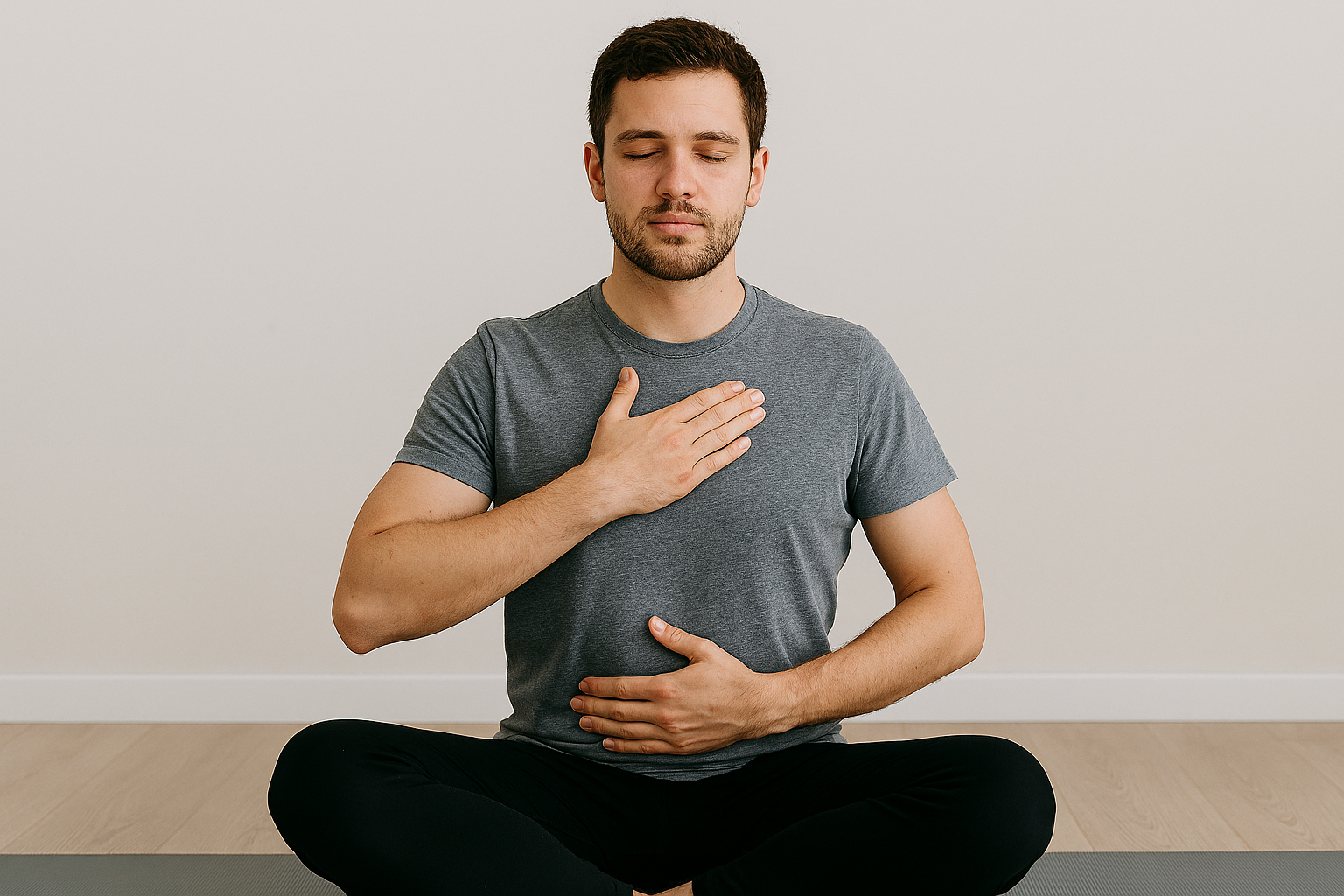
Breathing is a fundamental aspect for those who practice running, as it directly affects performance and endurance. Proper control of breathing allows for optimizing oxygen supply to the muscles, reducing fatigue, and improving concentration during physical activity. In particular, diaphragmatic breathing is an effective technique for runners, as it promotes deeper and more relaxed ventilation.
What is diaphragmatic breathing
Diaphragmatic breathing, also known as abdominal breathing, primarily involves the diaphragm, a muscle located beneath the lungs. During inhalation, the diaphragm contracts and moves downward, allowing the lungs to expand and fill with air more efficiently. This type of breathing is deeper compared to chest breathing, which is limited to the expansion of the chest and causes greater muscle tension.
Benefits of diaphragmatic breathing for runners
- Better oxygenation: deeper breathing increases the oxygen supply to muscles, enhancing performance.
- Greater control of breathing rhythm: helps coordinate breathing with steps, preventing breathlessness and hyperventilation.
- Fatigue reduction: Efficient breathing helps decrease the sensation of muscle fatigue.
- Relaxation: promotes relaxation of the body and mind, reducing stress and improving concentration.
Examples of exercises to learn diaphragmatic breathing
Diaphragmatic breathing at rest
- Siediti o sdraiati in posizione comoda.
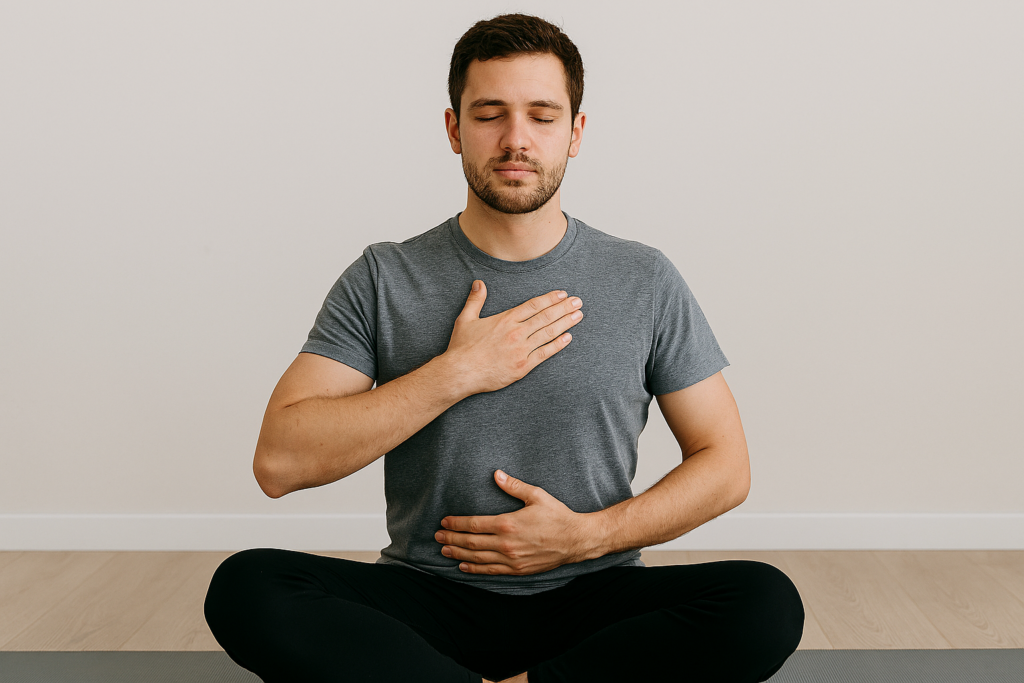
- Place one hand on your chest and one on your abdomen.
- Breathe in slowly through your nose, trying to lift only the hand on your abdomen while keeping the hand on your chest still.
- Exhale slowly through the mouth, completely emptying the lungs and lowering the hand on the abdomen.
- Repeat for 5-10 minutes, focusing on the movement of the diaphragm.
Breathing exercises while running
While running, it is important to maintain a regular and deep breathing rhythm. Here are some practical tips:
- Coordinate breathing and steps: for example, inhale for 3 steps and exhale for 2 steps. This helps maintain a steady rhythm and avoid shortness of breath.
- Inhale through the nose and exhale through the mouth: this technique promotes more effective air exchange and helps eliminate carbon dioxide.
- Maintain diaphragmatic breathing: even while running, try to breathe deeply using the diaphragm, avoiding shallow and rapid breaths.
- Rhythmic breathing exercises: during training, try varying your breathing rhythm to improve lung capacity and adaptation to the activity.
Guided exercises by a Garmin wearable
Follow this guide if you own a Garmin wearable that supports breathing exercises.
In conclusion, learning to manage diaphragmatic breathing is a key aspect for runners who want to improve their endurance and performance. Regularly practicing breathing exercises at rest and during running helps develop more efficient breathing, reducing fatigue and increasing the enjoyment of running.